Seven was 10 when she was diagnosed with epilepsy and photosensitivity, just weeks before Christmas. Festive light trails and family outings were suddenly put on hold, and a seizure on Christmas Eve left her worried that Father Christmas might not come. With support from her family and trusted information from Young Epilepsy, Seven is learning how to live confidently with epilepsy.
A Christmas unlike any other
Christmas has always been a major event in Seven’s busy family home. She is one of six children, growing up alongside her siblings Ace, Fox, Boo, Bear and Busy.
For their mum, Gemma, Christmas is her favourite time of year. The family usually fills the house with decorations and makes the most of festive days out throughout December.
“Our house does usually look like Santa’s grotto at Christmas,” said Gemma. “Everything in our house has flashing lights attached to it. Like if it stands still, it flashes.”
Christmas Eve has its own traditions too. The children make cookies for Father Christmas, scatter reindeer food outside and settle down together to watch festive films.
But in October 2025, just weeks before Christmas, Seven was diagnosed with epilepsy. The family also learned that she was photosensitive.
Suddenly, the celebrations and outings they had always enjoyed no longer felt straightforward.

Questions after diagnosis
Like many families receiving an epilepsy diagnosis, Seven’s family found themselves trying to understand a condition they knew very little about.
“You don’t know what you’ve just entered into,” said Gemma. “What can we or can’t we do? You don’t know at that point. It’s trial and error, right?”
Seven’s diagnosis followed a series of seizures. Her first recognised tonic-clonic seizure happened in the early hours of the morning, while the family were in a taxi on the way to the airport.
An ambulance was called and Seven was taken to hospital. At first, she was upset because she thought her family might go on holiday without her.
“She was in tears because she thought we were going to go on holiday without her,” said Gemma.
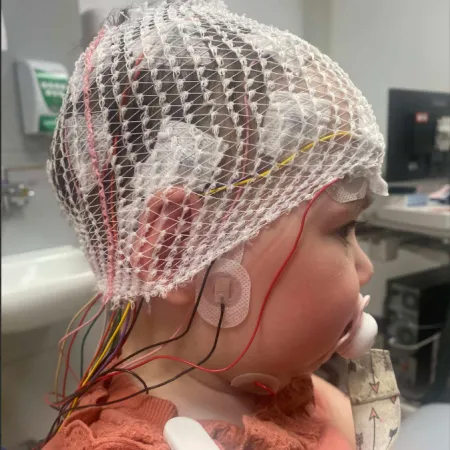
After another tonic-clonic seizure and further tests, including an EEG and MRI, Seven was diagnosed with epilepsy.
Looking back, the family realised there had been other signs. Seven had sometimes appeared to be daydreaming, which they later learned was likely to have been absence seizures.
“Since then, it’s just been a whirlwind of seizures and trying to get medication right,” said Gemma.

When festive lights felt risky
The diagnosis changed the family’s plans for Christmas. Seven was photosensitive, and Gemma did not yet know which festive activities would be safe.
Christmas light displays, illuminated winter walks, grottos and seasonal attractions had always been part of the family’s celebrations. Now, they felt like potential risks.
“The biggest thing for us last year was we do a lot of the Christmas lights, winter walks and stuff,” said Gemma. “And I just dropped all those last Christmas because I didn’t know enough about photosensitivity.”
I just thought, I’m not going to risk it. So we dropped everything.
Gemma and Seven’s dad were also trying to balance the needs of all six children. They did not want Seven’s siblings to miss out or feel resentful, but they also wanted to protect Seven and support her wellbeing.
“You can’t stop the others doing it,” said Gemma. “But then it’s keeping her mental health okay because she knows that she can’t do some stuff that the others can do.”
Epilepsy was not only affecting Seven. It was changing life for the whole family.
“Obviously it is life changing for Seven, but it’s life changing for those guys as well,” said Gemma. “They’re growing up in a completely different house to what we had 13 months ago.”

Trying to keep the magic of Christmas
As Christmas approached, Seven’s parents faced another difficult question: how could they keep Christmas magical while worrying that excitement and tiredness might affect her seizures?
“I think we felt bad, me and her dad felt bad as well because we were playing it down as well to try not to let her get excited,” said Gemma. “It’s just not fair.”
The family held on to as many of their Christmas Eve traditions as possible. They made cookies for Father Christmas and put out reindeer food.
Then, at bedtime, Seven had a tonic-clonic seizure.
“She had a massive tonic-clonic at bedtime and she was upset because she didn’t know Father Christmas would still come,” said Gemma.
It is a moment the family will never forget. Thankfully, one of Seven’s brothers quickly found the words to reassure her.
“He said, ‘He’ll probably bring you more presents because you’ve had a seizure.’”

The reality of Christmas Day
Christmas morning still brought excitement as Seven opened her presents, but the effects of the seizure stayed with her.
“She was excited in the morning opening presents, but you could see her drained throughout the day,” said Gemma.
Seven went to bed at around 5pm on Christmas Day.
For the family, it was another reminder that recovery from a seizure can take time, even during moments that should be filled with celebration.
Comfort after a seizure
Seven does not always know when a seizure is going to happen.
“I don’t really know when it’s gonna happen,” she said.
I kind of just wake up in a different space.
After a seizure, Seven feels very tired and needs time, rest and comfort. Her grandparents bought her a special epilepsy blanket, and she cuddles a toy called Wonky Dog while she recovers.
Her siblings all know how to help. One gets Wonky Dog, another brings the blanket, and another finds a pillow to support Seven’s neck and shoulders.
“They all know their own little jobs now, even in such a short time,” said Gemma.
They stay close until Seven knows where she is, who she is talking to and that she is safe. Once they know she is okay, ordinary family life soon returns.
“Once they know she’s okay, they terrorise her again,” Gemma joked.

Finding a way forward
Seven’s diagnosis has also affected the activities she loves. Before developing epilepsy, she enjoyed gymnastics, cheerleading, ballet, tap and jazz.
For now, she has had to stop cheerleading while her seizures are not fully controlled. She has, however, started returning to dance classes, and the family are looking for ways to adapt rather than miss out completely.
One of Seven’s favourite gymnastics and cheer coaches also has epilepsy. Knowing someone who understands has helped Seven see that stepping back from cheerleading does not have to be forever.
“She’s sort of saying, once you’re controlled, come back,” said Gemma. “Someone that understands it is, I think, such a key thing for her.”
One year on, the family are beginning to feel more confident about taking some control back.
“We’ve kind of let epilepsy rule what we do for the last 12 months,” said Gemma. “Now we’ve got to find a way where we can sort of take a bit of control back.”

Trusted information when everything felt uncertain
Looking back at the first weeks after Seven’s diagnosis, Gemma says finding clear, trusted information made a huge difference.
“This time last year, that’s when we found Young Epilepsy,” she said. “Your website was the first one that we came across that I was like, well, that’s actually logical and sensible and it was fact and not opinions.”
“The amount of information on your website. That’s how we came to use you guys so much.”
For now, Seven and her family are taking things step by step. They are learning what helps her recover, how to adapt the activities she enjoys and how to feel more confident about what is safe.
Support families this Christmas
This Christmas, Seven’s story shows why families need trusted information and practical support from the moment a child is diagnosed with epilepsy.
Every day, parents are told that their child has epilepsy and return home with countless questions. What does the diagnosis mean for their future? Which activities are safe? How will it affect family life? Where can they find information they can trust?
By supporting Young Epilepsy’s Christmas Appeal, you can help more children and families find reliable answers, reassurance and a community that understands when they need it most.